Pharma shipping at 2–8 °C: keeping the cold chain intact
Many medicines, vaccines and biologics must stay between 2 and 8 °C throughout. Even short deviations can make an entire shipment unusable. Packaging, routing and complete documentation are what count.
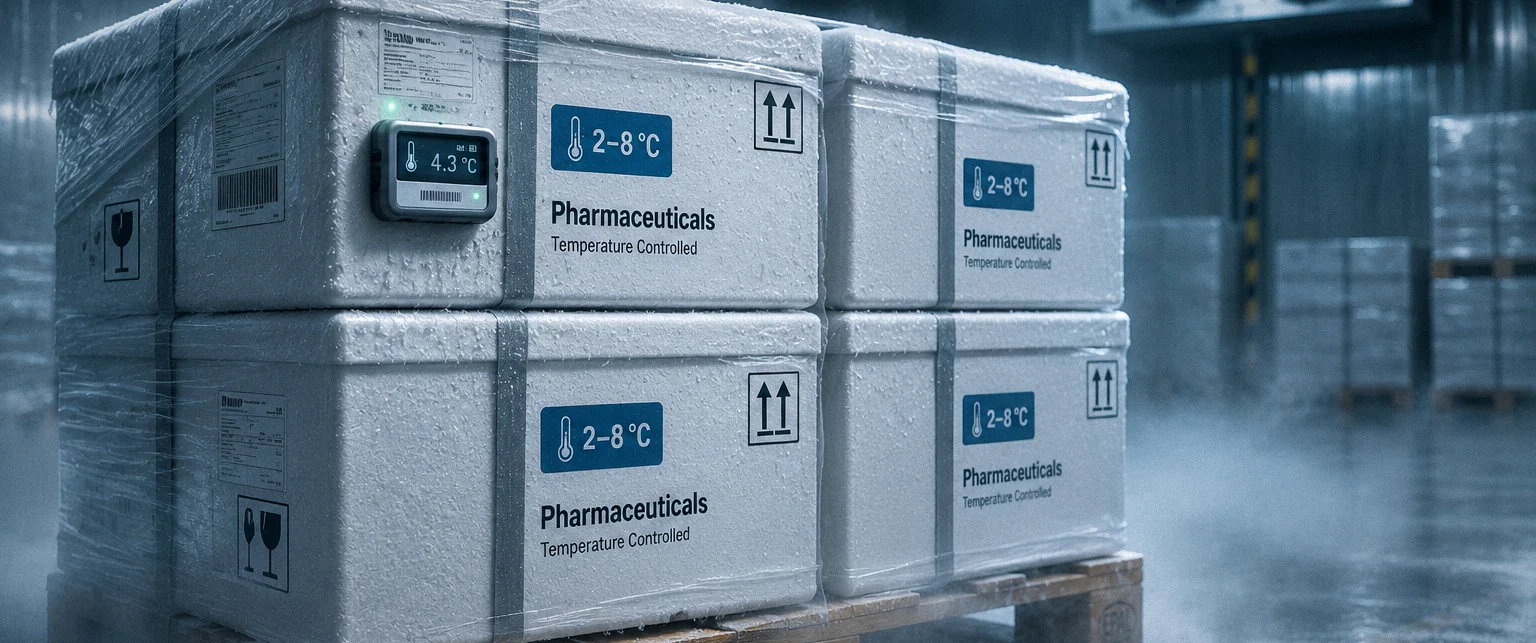
The transport of medicines is governed by the EU Good Distribution Practice (GDP) guidelines. Storage conditions must be maintained and proven in transit as well. In air freight, the IATA Temperature Control Regulations (TCR) govern labelling and handling.
The usual temperature ranges
| Range | Temperature | Typical goods |
|---|---|---|
| Refrigerated | +2 to +8 °C | Vaccines, insulin, biologics |
| Controlled room temperature | +15 to +25 °C | Tablets, many generics |
| Frozen | −25 to −15 °C | Certain active ingredients and samples |
| Dry ice | down to −78 °C | Cell and gene therapies, samples |
Dry ice is a dangerous good in air freight (UN 1845) and must be declared with its quantity.
Passive or active packaging?
Passive packaging means insulated boxes with cooling elements. They hold the temperature for a qualified period, for example 72 or 120 hours, and are ideal for parcels and smaller shipments. Active containers cool and heat themselves, are rented, and suit whole pallets and long routes. Thermal covers additionally protect pallets from sun and cold on the apron.
What the rules require
- EU GDP guidelines (2013/C 343/01): transport under the required conditions, qualified packaging, handling of deviations
- Temperature loggers in the shipment, read out after arrival
- IATA “Time and Temperature Sensitive” label showing the permitted temperature range on every package
- Temperature requirements and handling instructions on the air waybill
- Airlines and handlers with pharma certification, for example IATA CEIV Pharma
How we plan the cold chain
- Routing via hubs with cool centres, avoiding long connection times
- No arrival at weekends or on public holidays if the consignee cannot accept
- Customs declaration prepared before the goods land
- Short apron times and refrigerated delivery to the consignee
- Contingency plan for delays, for example re-conditioning passive boxes
With TEMair we organise temperature-controlled air freight; for larger volumes in reefer containers there is TEMsea.
Sources: EU-GDP-Leitlinien 2013/C 343/01 · IATA Temperature Control Regulations
Temperature-sensitive goods to ship?
Tell us the temperature range, quantity and route. We plan the cold chain and send you a quote.