Shipping lithium batteries by air: what applies in 2026
Lithium batteries are among the most common dangerous goods in air freight. Since 1 January 2026 the 67th edition of the IATA Dangerous Goods Regulations has applied, with one important change: batteries packed with equipment may now only fly with a limited state of charge.
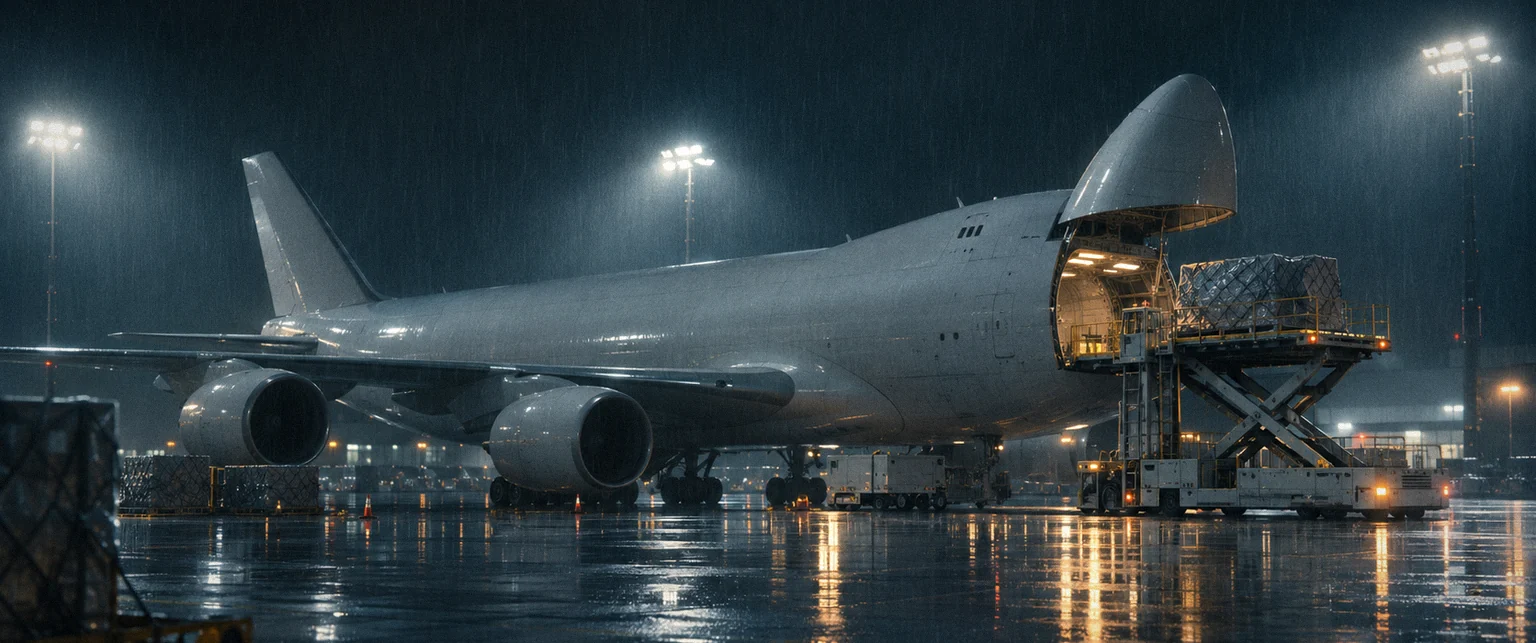
Since 2026, lithium ion batteries above 2.7 Wh packed with equipment (UN 3481) must not exceed a 30 % state of charge. Batteries shipped on their own (UN 3480, UN 3090) fly on cargo aircraft only and must always be fully declared as dangerous goods. Damaged batteries are forbidden in air freight.
The four UN numbers
Which rules apply depends on whether the batteries are lithium ion or lithium metal, and whether they are shipped on their own, packed with equipment or contained in equipment.
| UN number | Contents | Packing instruction |
|---|---|---|
| UN 3480 | Lithium ion batteries on their own | PI 965 |
| UN 3481 | Lithium ion batteries packed with or contained in equipment | PI 966 / PI 967 |
| UN 3090 | Lithium metal batteries on their own | PI 968 |
| UN 3091 | Lithium metal batteries packed with or contained in equipment | PI 969 / PI 970 |
What is new in 2026?
Since 1 January 2026, lithium ion cells and batteries above 2.7 Wh that are packed with equipment (UN 3481, PI 966) must be shipped at a state of charge not exceeding 30 % of their rated capacity. Alternatively, the indicated capacity may not exceed 25 %. The same applies to vehicles powered by a lithium ion battery above 100 Wh (UN 3556). In the 2025 edition this was only a recommendation.
For lithium ion batteries shipped on their own (UN 3480), the 30 % limit has applied since 2016. For batteries contained in equipment (PI 967), there is still no such limit.
Batteries on their own: cargo aircraft only
Lithium ion and lithium metal batteries on their own (UN 3480 and UN 3090) may not be carried on passenger aircraft. They fly on cargo aircraft only and carry the “Cargo Aircraft Only” label. Since April 2022 there has also been no Section II relief for them: they must always be fully declared as dangerous goods.
Section I or Section II?
For batteries packed with or contained in equipment, the energy rating determines the effort. Small lithium ion cells up to 20 Wh and batteries up to 100 Wh can be shipped under Section II with simplified rules: lithium battery mark on the package, no dangerous goods declaration, but quantity limits per package. Larger batteries are fully regulated under Section I.
The documents you need
- UN 38.3 test summary from the manufacturer: proof that cell and battery passed the UN tests
- Data sheet with the watt-hour rating (lithium ion) or lithium content (lithium metal)
- Confirmation of the state of charge where the 30 % limit applies
- For fully regulated shipments: the shipper’s declaration for dangerous goods, prepared by trained staff
- Correct marking: lithium battery mark or the class 9 lithium battery hazard label, and “Cargo Aircraft Only” where required
Important: damaged, defective or recalled lithium batteries may not be carried by air. They can only travel by road or sea under special conditions.
The current IATA DGR and the rules of the airline, which may be stricter, are always binding. With DANair we check your documents before booking and clarify acceptance with the airline.
Sources: Labelmaster: Lithium SoC 2026 · IATA Lithium Batteries
Lithium batteries to ship?
Send us the data sheet and test summary. We check the classification and send you a quote.